
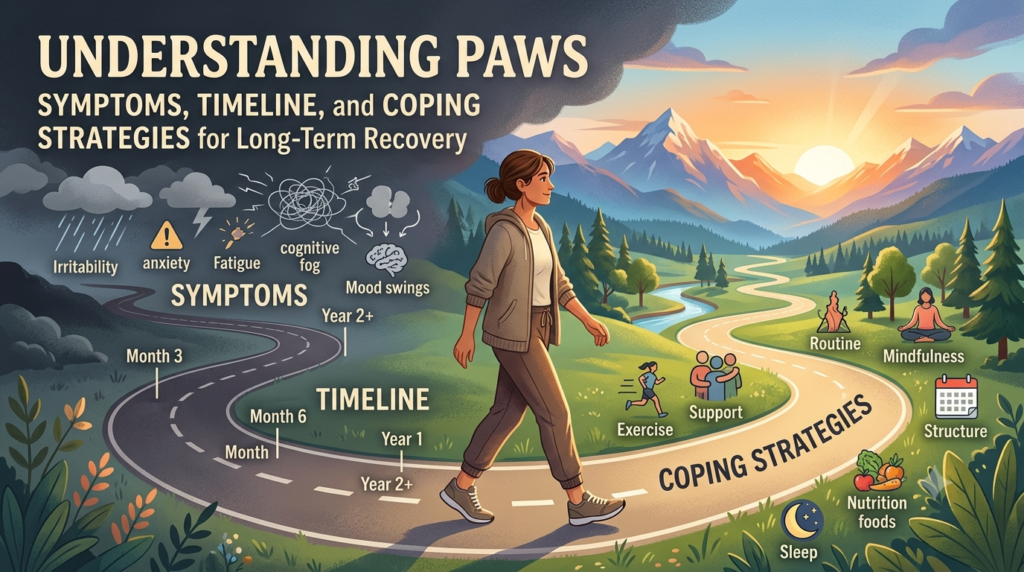
Achieving physical detox and getting through the first few weeks of recovery is a massive milestone. But many people in recovery are surprised when, weeks or even months later, sudden waves of fatigue, mood swings, or brain fog reappear without warning.
If you are experiencing these delayed symptoms, you aren’t sliding backward—you are likely experiencing Post-Acute Withdrawal Syndrome (PAWS).
Understanding PAWS is essential for preventing relapse and navigating the long-term healing process. Here is what you need to know about PAWS symptoms, how long they last, and actionable steps to manage them.
What is Post-Acute Withdrawal Syndrome (PAWS)?
While acute withdrawal occurs immediately after stopping substance use and focuses primarily on physical detox, post-acute withdrawal involves the brain resetting its chemical balance over time.
As the central nervous system slowly repairs dopamine pathways and neurochemistry, the brain struggles to adapt to daily stressors. This neurological adaptation manifests as temporary, recurring emotional and physiological symptoms.
7 Common Symptoms of PAWS
PAWS symptoms tend to come in waves. You might feel clear-headed and energetic for two weeks, only to experience a sudden surge of symptoms for a few days. Common signs include:
- Brain Fog & Cognitive Difficulty: Difficulty focusing, slow problem-solving, or trouble remembering daily tasks.
- Emotional Mood Swings: Sudden shifts from severe anxiety or irritability to emotional numbness and apathy.
- Sleep Disturbances: Insomnia, vivid dreams, or irregular sleep-wake cycles.
- Physical Fatigue: Unexplainable exhaustion, even after getting adequate rest.
- Increased Sensitivity to Stress: Feeling overwhelmed by minor daily stressors that usually wouldn’t bother you.
- Motor Incoordination: Occasional clumsiness, balance issues, or slower reaction times.
- Intermittent Cravings: Sudden, brief urges to use after a period of relative calm.
The PAWS Timeline: How Long Does It Last?
The duration of PAWS varies based on individual health, substance history, and duration of use.
- Onset: Typically begins 1 to 2 weeks after acute physical withdrawal ends.
- Peak Intensity: Most intense during the first 3 to 6 months of recovery.
- Duration: Can last anywhere from 6 months to 2 years, with symptoms gradually decreasing in frequency and intensity over time.
Because PAWS moves in episodes—often called “PAWS waves”—it helps to track when symptoms hit so you can identify patterns and personal triggers.
How to Manage and Cope with PAWS Waves
When a PAWS wave hits, your immediate priority is maintaining stability and protecting your recovery momentum. Use these five practical strategies:
1. Separate the Symptom from Your Self-Worth
Remind yourself that PAWS is a biological response, not a personal failure. Saying out loud, “This is just my brain rewiring itself, and it will pass,” helps reduce panic and self-doubt.
2. Prioritize Sleep and Physical Hygiene
Since the nervous system is already under stress, lack of sleep drastically magnifies PAWS symptoms. Maintain a consistent sleep schedule, limit late-night screen time, and stay hydrated.
3. Lower Your Immediate Daily Stress
When you feel brain fog or anxiety creeping in, scale back unnecessary commitments. Practice saying no to extra tasks until the wave subsides.
4. Talk to Your Support Network
Isolation amplifies PAWS. Reach out to peer support groups, a sponsor, or a therapist who understands addiction recovery. Sharing what you are experiencing normalizes the process and keeps you accountable.
5. Keep a Daily Symptom Log
Track your sleep, mood, energy levels, and stressors. Over time, you will notice that the distance between PAWS waves grows longer and the intensity becomes milder.
When to Seek Professional Support
While PAWS is a standard part of neurological recovery, severe clinical depression, persistent panic attacks, or overwhelming cravings require professional guidance. Work with an addiction medical specialist or mental health professional to ensure you have comprehensive care.
Remember: PAWS is temporary, but recovery is permanent. Every wave you navigate strengthens your nervous system and brings you closer to long-term balance.